
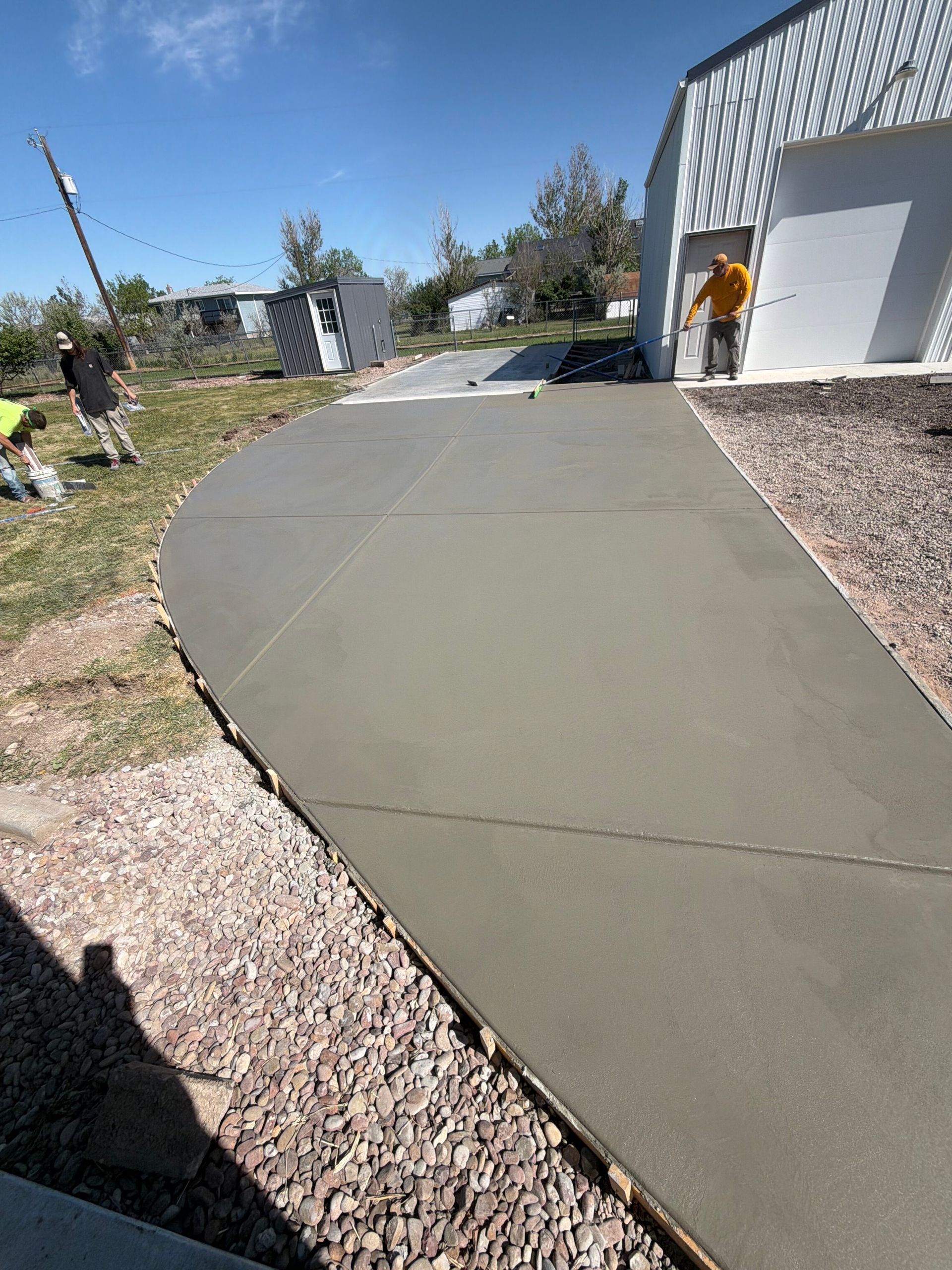
Surfaces Built to Carry Loads Without Cracking
Concrete Driveways and Flatwork in Great Falls for residential access, patios, walkways, and commercial parking areas
In Central Montana, concrete driveways and flatwork must withstand freeze-thaw cycles, vehicle loads, and snowplow traffic without cracking or settling, which requires proper subgrade preparation, adequate slab thickness, and controlled jointing that directs cracking to planned locations. Minardi Construction and Excavation installs concrete driveways, patios, walkways, and commercial flatwork throughout Great Falls where site grading, base compaction, and finish quality determine whether surfaces last decades or require replacement within years. Properly installed concrete provides stable access for vehicles, functional outdoor living areas, and pedestrian pathways that shed water and resist surface deterioration from weather exposure.
Installation begins with excavation to remove unstable topsoil and organic material, followed by compacted gravel base installation that provides uniform support and prevents differential settling. Forms are set to finished grade with drainage slope built in, reinforcing steel or fiber is placed to control cracking, and concrete is poured, finished, and jointed to create planned control joints that manage shrinkage. Surface finish options range from broom texture for slip resistance to exposed aggregate or stamped patterns for decorative applications.
Request a project estimate that accounts for site conditions, access requirements, and finish specifications for your concrete work.
What Proper Base Preparation Prevents
Subgrade and base quality determine whether concrete slabs settle unevenly or crack from inadequate support, because concrete cannot bridge voids or soft spots that develop when poorly compacted soil consolidates under load. Base layers are placed in lifts and compacted to specified density, creating a stable platform that distributes slab weight evenly across native soil. Thickness specifications account for expected loads, with residential driveways typically requiring four to six inches of concrete depending on vehicle weight and soil bearing capacity.
After concrete cures, you notice smooth surfaces without abrupt elevation changes, positive drainage that directs water away from structures, and control joints that remain tight without random cracking between them. Driveways support vehicle traffic without rutting or settlement, patios remain level for furniture placement and water drainage, and walkways provide stable pedestrian access without trip hazards from heaving or sinking sections.
Concrete work integrates with site grading and drainage planning to prevent water from pooling against foundations or undermining slab edges, which causes settlement and void formation. Projects throughout Great Falls and surrounding communities address varied site slopes, soil types, and access limitations that affect equipment placement and material delivery methods.
What Clients Ask About Concrete Flatwork
Residential and commercial property owners want to understand what affects concrete longevity, how installation timing impacts project scheduling, and what maintenance concrete requires over time.
What site preparation is required before pouring concrete?
Excavation removes unstable topsoil, compacted gravel base is installed to provide uniform support, forms are set to finished grade with drainage slope incorporated, and reinforcement is placed before concrete arrives on site.
How thick should concrete driveways be in Great Falls?
Residential driveways typically require four inches of concrete for standard vehicles, though heavier trucks or equipment may need six-inch thickness, and commercial applications are designed based on expected traffic loads and frequency.
What are control joints and why do they matter?
Control joints are saw-cut or tooled grooves that create weakened planes where concrete cracks as it shrinks during curing, directing cracks to planned locations rather than allowing random cracking across slab surfaces.
When is the best time to pour concrete in Montana?
Concrete installation occurs when temperatures remain above freezing for several days after placement to allow proper curing, typically from late spring through early fall in Great Falls, though cold-weather techniques extend the season when project timing requires.
How soon can concrete be used after installation?
Light foot traffic is typically safe within 24 hours, but vehicle traffic should wait at least seven days to allow adequate strength development, with full curing continuing for several weeks as concrete hardens and gains maximum load capacity.
Minardi Construction and Excavation coordinates concrete installation with site preparation and grading services for efficient project completion. Reach out for a detailed estimate that addresses your specific flatwork requirements and site conditions.