Repairs That Restore Normal Drainage Function
Septic Repair Services in Great Falls for backups, odors, and drain field failures affecting rural and residential properties
Septic systems fail when drain fields become saturated and stop absorbing effluent, when distribution lines clog or break, or when tanks develop cracks that leak untreated wastewater into surrounding soil. Minardi Construction and Excavation diagnoses and repairs septic system failures throughout Great Falls and Central Montana for properties experiencing slow drains, sewage backups, standing water over drain fields, or persistent odors that indicate system malfunction. Repair work identifies the specific failure point through excavation and inspection, then addresses the underlying cause rather than temporarily clearing symptoms.
Common septic problems include distribution box failures that prevent even effluent flow to drain field lines, broken or collapsed pipes that leak before reaching the drain field, and bio-mat buildup in drain field trenches that blocks soil absorption. In Central Montana, freeze damage to shallow components and root intrusion from nearby trees also cause system failures that require excavation and component replacement. Diagnosis begins with evaluating recent changes in household water use, inspecting tank levels and condition, and tracing drainage patterns to locate blockages or leaks.
Request a septic system evaluation to identify the cause of drainage problems and review repair options.
What Gets Fixed During Septic Repairs
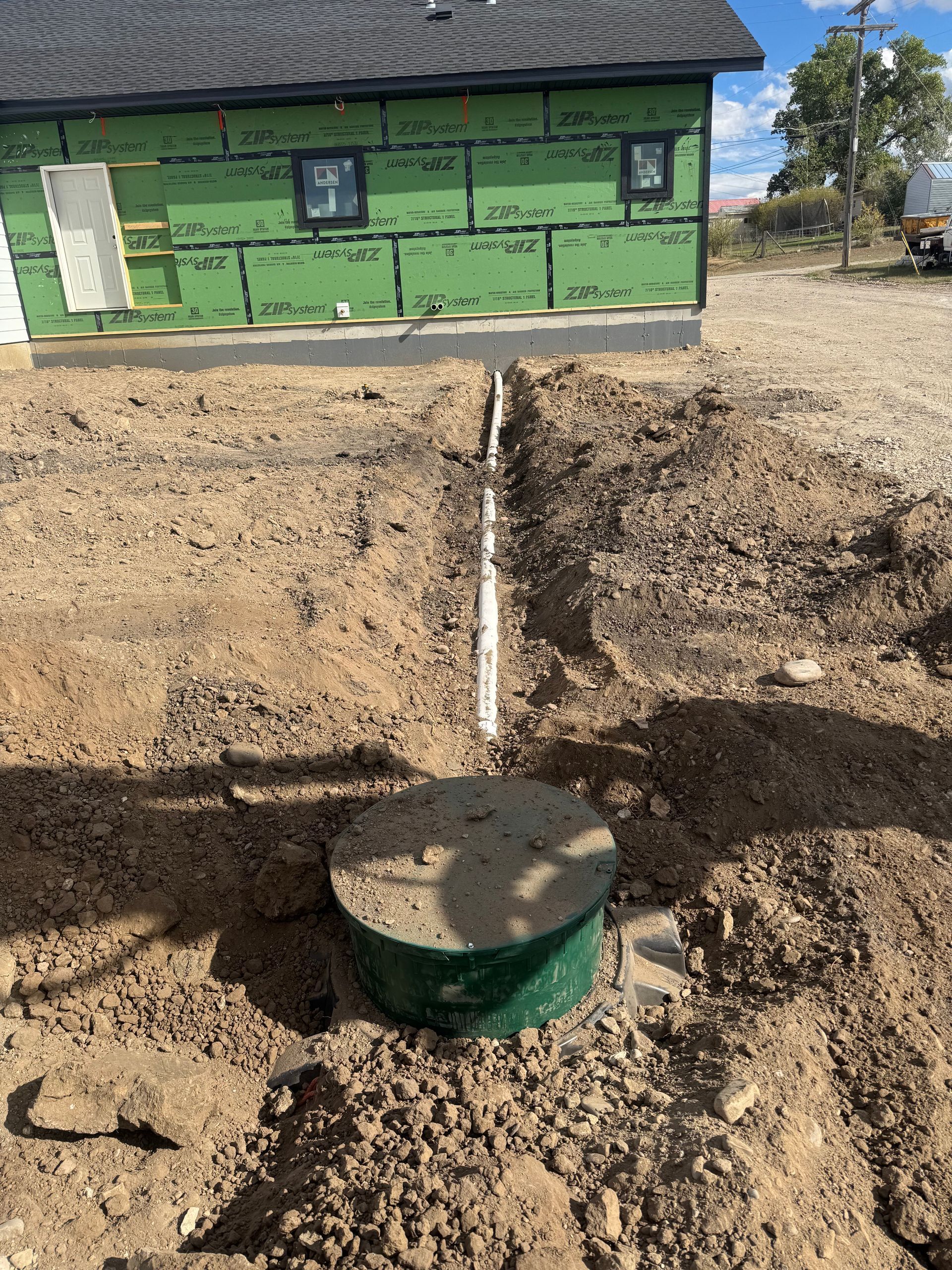
Repair work targets the failed component while preserving functional parts of the system, which may involve replacing cracked tanks, rebuilding distribution boxes, clearing or replacing clogged drain field lines, or excavating and installing new drain field sections when soil absorption capacity is exhausted. Excavation exposes buried components for inspection and replacement, new materials are installed to code specifications, and soil is backfilled and compacted to prevent settling over repaired areas.
After repairs are completed, household drains function normally without backups or slow drainage, odors disappear as the system processes wastewater properly, and wet spots or surfacing effluent over the drain field dry up as absorption resumes. Repaired systems return to normal operation without requiring daily monitoring or frequent pumping, though addressing the original cause of failure—such as excessive water use or lack of tank pumping—prevents recurrence.
Some failures require partial drain field replacement rather than full system installation, particularly when only one section of the drain field has failed and other areas still absorb effectively. Repair scope depends on how long the system operated improperly before repair, because prolonged failures allow bio-mat to spread and saturate larger soil areas.
Common Questions About Septic Repairs
Property owners facing septic problems want to understand what caused the failure, whether repair or replacement makes sense, and how quickly normal function can resume.
What signs indicate a septic system needs repair?
Slow drains throughout the house, sewage backups in lower fixtures, gurgling sounds in drain lines, persistent sewage odors near the tank or drain field, and wet or soggy areas over the drain field all signal system problems that require professional evaluation.
How are septic system problems diagnosed?
Diagnosis starts with inspecting tank levels and condition, checking distribution box function, and tracing drainage patterns through excavation if needed to locate breaks, clogs, or saturated drain field areas that no longer absorb effluent.
Can part of a septic system be repaired without replacing everything?
Many failures involve specific components like broken pipes or failed distribution boxes that can be replaced individually, though drain field saturation may require new trench installation if soil absorption capacity is exhausted beyond recovery.
How quickly should septic problems be addressed?
Immediate attention prevents untreated wastewater from contaminating groundwater, avoids indoor sewage backups that create health hazards, and stops further drain field damage that expands repair scope and cost over time.
What causes septic systems to fail prematurely in Great Falls?
Lack of regular tank pumping allows solids to enter drain fields and clog soil, excessive water use from leaking fixtures or large laundry volumes overwhelms system capacity, and poor original installation or undersized systems fail when household water use exceeds design limits.
Minardi Construction and Excavation provides septic repair evaluations and solutions for properties throughout the Great Falls area. Arrange an inspection to determine what repair work your system requires and restore proper function.