Ground Shaped to Prevent Water Problems
Land Grading and Site Preparation in Great Falls for properties requiring drainage control, construction readiness, and surface water management
Surface water moves toward low spots, saturates soil around foundations, floods driveways, and creates mud zones that make properties difficult to use during spring runoff and storm events. Minardi Construction and Excavation provides land grading and site preparation services in Great Falls that reshape ground surfaces to direct water away from structures, prepare building sites for construction, and improve property functionality. Grading involves removing high spots, filling depressions, and creating slopes that prevent pooling while maintaining stable soil conditions for future use.
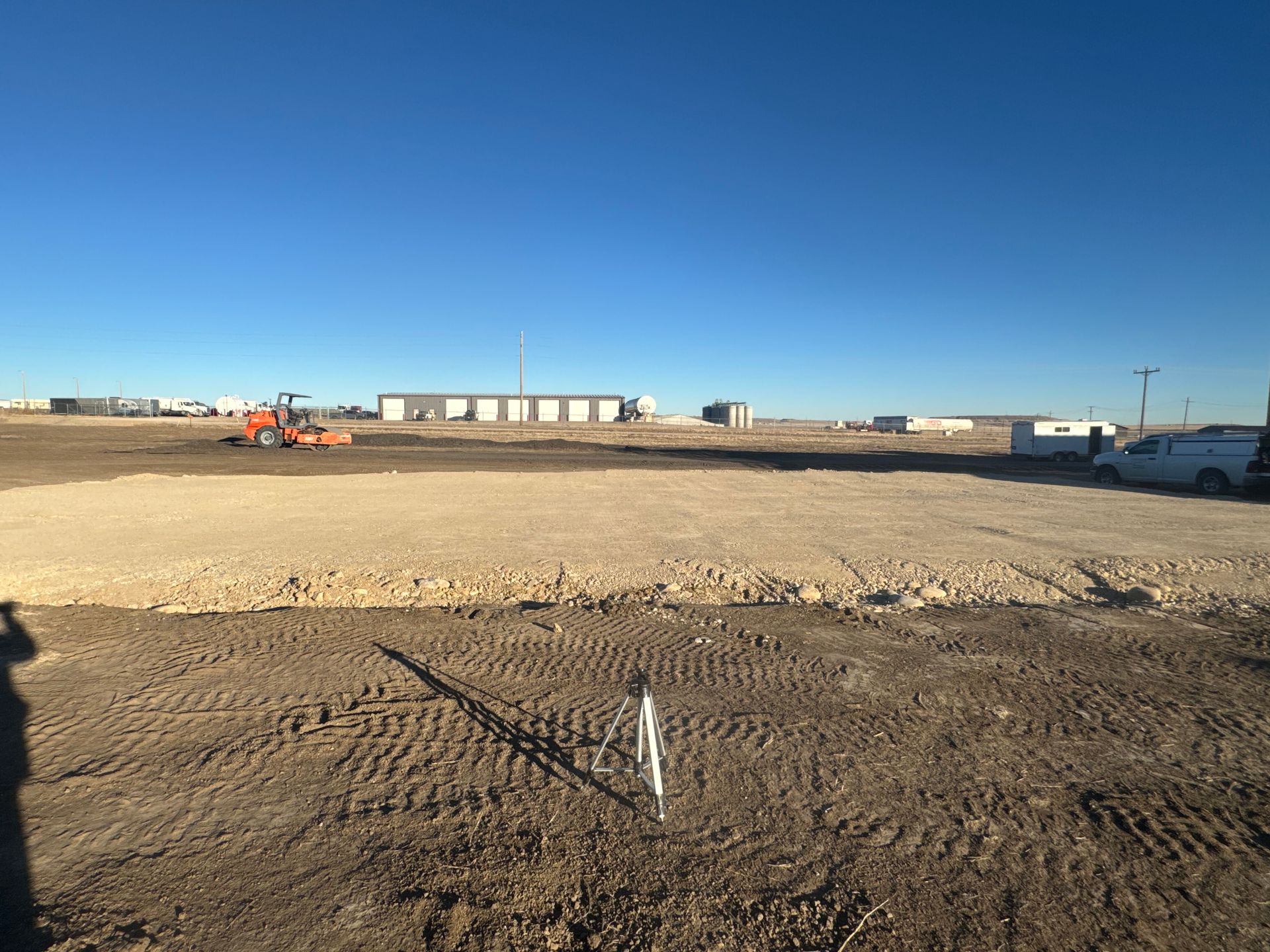
The service applies to residential lots preparing for home construction, agricultural properties installing new shops or equipment storage areas, driveway installations requiring a stable base, and septic system sites where drain field elevations must meet regulatory slope requirements. Rough grading establishes overall site contours and drainage flow patterns, while finish grading creates final surface elevations for driveways, building pads, and landscaping areas.
Arrange an on-site evaluation to identify drainage concerns and discuss grading solutions for your property.
What Proper Grading Accomplishes Long-Term
Grading changes where water flows and how quickly it leaves the property, which affects foundation stability, driveway longevity, and whether low-lying areas become unusable after precipitation. The process involves calculating slope percentages that move water without causing erosion, identifying outlet points where runoff exits the property, and compacting fill material so surfaces don't settle and create new depressions. For septic system sites, grading ensures drain fields sit at elevations that allow effluent to percolate through soil layers without surfacing or backing up.
After grading work finishes, you'll notice that water no longer pools near your foundation after storms, driveways shed runoff toward drainage swales instead of holding puddles, and construction equipment can access the building site without sinking into soft ground. The reshaped surface remains stable because compaction equipment presses fill layers to density levels that resist settling under load.
Site preparation services include vegetation clearing, topsoil removal and stockpiling for later use, rough grading to establish drainage patterns, finish grading to final elevations, and compaction of surfaces that will support structures or paved areas. Projects throughout the Great Falls area often require coordination with septic designers, building inspectors, or utility companies during the preparation phase.
Answers to Common Grading Questions
Property owners preparing for construction or addressing drainage problems often ask about grading methods, timing, and what the work includes.
How does grading prevent foundation water problems?
Grading creates slopes that direct runoff away from the building perimeter, typically at a minimum two percent grade for the first ten feet, which keeps water from saturating soil that contacts the foundation and entering basements or crawl spaces.
What's the difference between rough grading and finish grading?
Rough grading reshapes large areas to establish overall drainage flow and removes or redistributes significant soil volumes, while finish grading fine-tunes surface elevations to exact specifications for driveways, building pads, or landscaping features.
When should grading happen relative to other construction phases?
Grading follows any demolition or excavation work and precedes foundation construction, utility installation, or driveway paving, since heavy equipment used for grading would damage completed surfaces or utilities.
Why do some graded areas develop low spots after a year?
Low spots indicate inadequate compaction of fill material, which settles under its own weight or when saturated, so proper grading includes compacting fill in lifts using vibratory equipment that increases soil density layer by layer.
What site conditions in Great Falls affect grading work?
Clay-heavy soils common in this area require more compaction effort and drain slowly, spring thaw periods create saturated ground that's difficult to grade until moisture levels drop, and frozen ground halts grading work entirely until temperatures rise.
Minardi Construction and Excavation handles grading projects for residential, agricultural, and development sites with equipment suited to projects of varying scale and complexity. Contact the company to request a grading estimate and discuss drainage management strategies for your property.